
The world has entered the age of Information, which, as it implies, is characterized by the incredible boom in information acquisition and sharing around the world. Most information is freely available on the internet. However, some companies collect private information and keep it secret for their own use. Companies collect data through phone microphones, Alexas, televisions, online purchase trends, and browser search history. In fact, after researching the history of Frederick Pettengill for this essay I was faced with widespread advertisements for Ancestry.com and other historical documentation centered sites. The technological era has also marked significant improvements in our abilities to communicate with one another. As such, word spreads very quickly, especially with social media. Oftentimes the ideas that spread through social media, especially as they relate to the #MeToo movement and Black Lives Matter, have resulted in the stigmatization of some groups on a larger scale, usually for the better, but sometimes for the worse. Such was the case with Pettengill Hall at Bates College, “named in honor of the late Frederick B. “Pat” Pettengill” (N.A. 2017). When I began doing research on Pat Pettengill, I had already convinced myself that he would likely be a racist, sexist man because he was born in the early 20th century. I reached this conclusion because that is what has become the standard of wealthy white men born in the early 1900s on the internet. These preconceptions were proved to be wrong, however, nonetheless I spent hours looking for negative attributes. As such, I argue that when reading information, the data should be interpreted at face value without the influence of preconceived ideas.
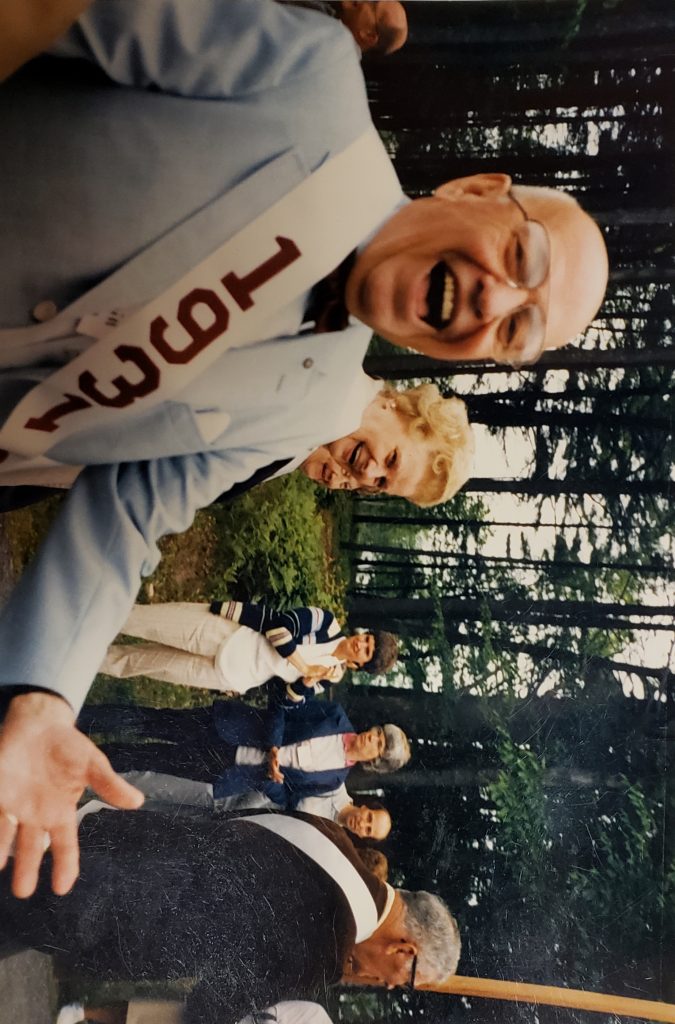
To explain my point, it is necessary to know some information about Pat Pettengill. He was born on August 29, 1909, in Pembroke, New Hampshire, and grew up an avid fan of theater. He later went to Bates College, participating in debate, writing for The Bates Student, and running track, until he graduated with the class of 1931. He went on to work “for the YMCA in Keene, New Hampshire and Red Bank, New Jersey, and taught history and economics at Bordentown Military Academy, where he also managed the athletics program” (Stefko, 2011). In 1952 he married Ursula Prater, with whom he remained until his death in 1987. Nonetheless, throughout his time at Syracuse, “Pat Pettengill remained dedicated to Bates, serving as the College Club president and recruiting students” (Stefko, 2011). In fact, he was known as “Mr. Bates” among many, and by the time of his death, he had donated more than 100,000 dollars to Bates College (Pettengill Papers, 1987).
As mentioned, I expected Pat to be a prejudiced man, and because of these expectations, I unjustifiably tried to find negative things about him. Not only that, when I failed to find what I was looking for, I assumed he simply chose to omit evidence of such from the papers given to Bates College. Pettengill being a wealthy white male living throughout the 20th century led me to presume that he held racist or sexist beliefs. To be blunt, I had no reason to believe he would be a bad person. Contrary to my preconceptions, there is substantial evidence indicating his beliefs fell on the polar opposite side of the spectrum. A letter written to him by Howard Card, one of his coworkers at Syracuse, indicated that
Pettengill helped pay for the tuition of a black student who could not afford to pay his dues.
In addition, part of a scrapbook made by Ursula mentioned that a Chinese exchange student would come to his home frequently simply to visit with Pat and Ursula. She wrote, “Pat was always looking out for the students… they were always welcome in his office or his home. Or should I say, ‘Looking for him!’” (Pettengill Papers, 1974). Further, both he and Ursula were given Paul Harris Fellows, a title given to those who donate and volunteer a significant amount with a multinational organization dedicated to unraveling racist beliefs. The Pettengills were an accepting, open, and loving couple through and through.
In order to explore the reasons why I had the preconceptions I did, the concept of “haunting” must be explained. Haunting is most often associated with ghosts in a terrifying or spooky sense as the words pertain to monsters, demons, or ghosts. However, in the introduction to Ghostly Matters, Avery Gordon explains her own interpretation of the term “haunting.” She touches on the necessity to comprehend modern forms of systematic racial, political, and social abuse and their impacts on people, and develops ways to write about the lingering damage caused by “historical alternatives” to modern systems of power. To accomplish this, Gordon analyses “haunting,” describing it as “a way in which abusive systems of power make themselves known and their impacts felt in everyday life, especially when they are supposedly over and done with” (Gordon 2). Haunting, Gordon indicates, is the way in which we are alerted to the continued presence of societal abuses and tragedies we may have thought were long gone. It puts us face to face with “ghosts.” It renders the unseen, seen. Having read this excerpt several months ago, I think that my mind has been keyed to look for the negative implications of historical figures and systems, and how they present themselves in the modern day. As a result, I reached for anything negative I could latch onto.
The gravity of my development of preconceptions can be explained by analyzing Edina Harbinja’s “Post-mortem privacy 2.0: theory, law, and technology,” in which Harbinja unfurls the complexities of post-mortem privacy, explaining its relevance to human autonomy and testamentary freedom. Harbinja defines post-mortem privacy as “the right of a person to preserve and control what becomes of his or her reputation, dignity, integrity, secrets or memory after death” (Harbinja 2). Citing theorists such as Kant and Nissenbaum, Harbinja explains the relationship between privacy and a sense of autonomy. Autonomy is established to be generally agreed upon by western philosophers and theorists as a crucial piece to the puzzles that are social and ethical theories, and Harbinja explains that privacy defines the confines of this autonomy. Although many disagree with the concept of total privacy and autonomy, Harbinja wholeheartedly believes in their significance to society. Like with privacy and autonomy, Harbinja uses the works of theorists and philosophers on testamentary freedom to rationalize her argument that privacy should be respected post-mortem. For example, she quotes social theorist Raz, claiming that “an autonomous person is one who is ‘an author of their own life’” (Harbinja 5). In Harbinja’s work, life is likened to someone’s reputation, and this especially holds true in the Informational Age. By having unreasonable preconceptions about Pettengill even while research, I infringe upon his freedom because I chose to omit the reputation he earned and demonstrates through the papers given to the Muskie Archives.
To summarize, Frederick and Ursula Pettengill were a loving and caring couple that dedicated their lives to serving others and maintained a truly honorable reputation. The manner in which I developed preconceived ideas about them based on generalizing social media-borne tropes is unfair and infringes on their freedom and autonomy.
